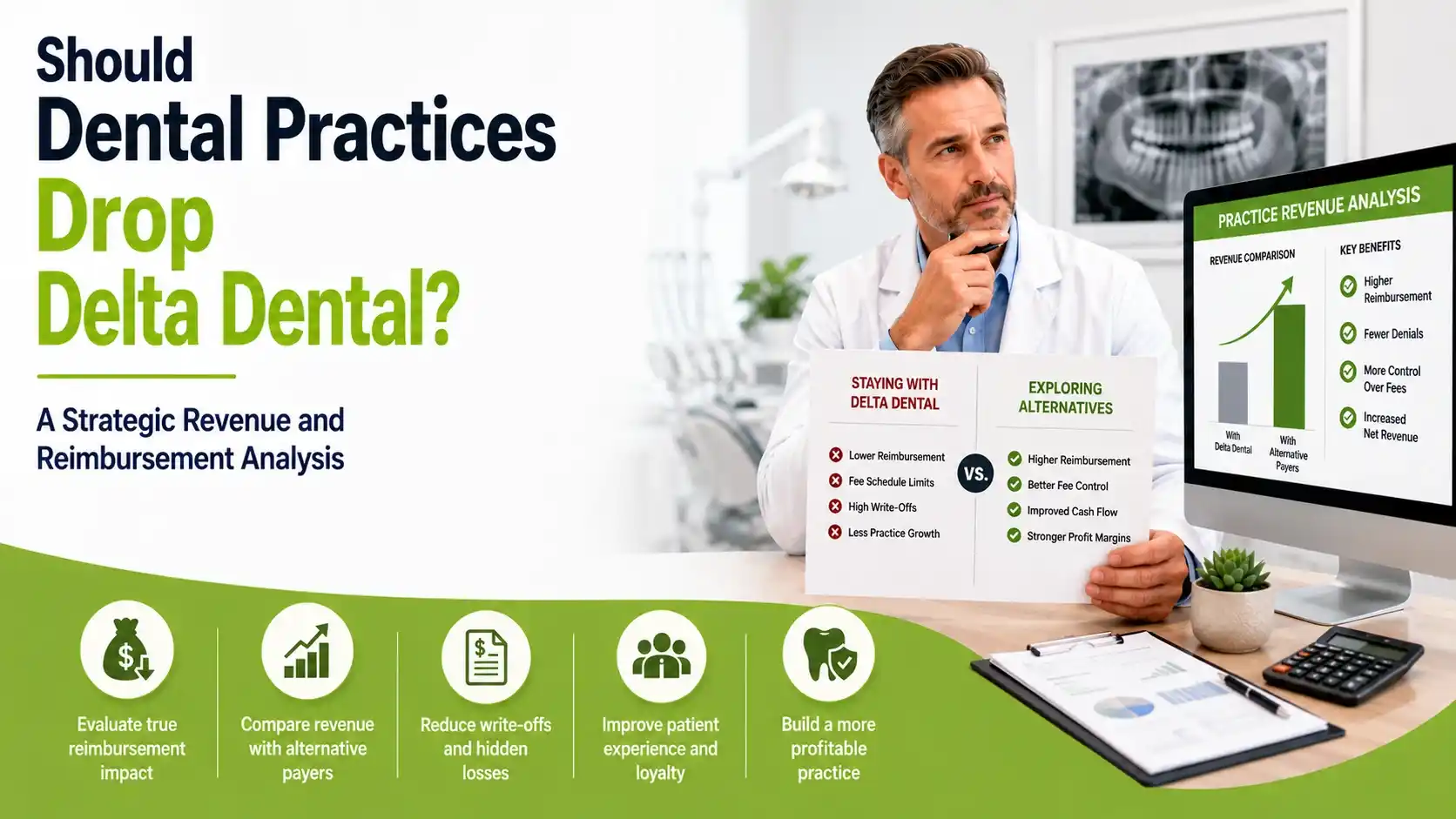
Running a dental practice is no longer just about excellent patient care—it is equally about smart business decisions and streamlined operations. One of the most critical yet often overlooked components of building a successful dental office is insurance credentialing. For dentists, having the right insurance credentialing partner can mean the difference between consistent patient flow and struggling with administrative bottlenecks. That’s where a professional insurance credentialing service comes into play.
This blog explores why dental insurance credentialing is essential, the benefits of outsourcing it, and how choosing the right service provider can help dental professionals grow their practices.
Table of Contents
ToggleWhat Is Dental Insurance Credentialing?
Dental credentialing is an essential step in ensuring that providers are qualified and ready to deliver safe, high-quality care to patients. This process involves verifying a dentist’s education, DEA registration, malpractice insurance, and other professional certifications. Insurance companies often take extra steps such as calling dental schools to confirm graduation records, checking with past employers for work history, and reviewing the National Practitioner Data Bank (NPDB) for any malpractice or disciplinary history. They may also investigate state and federal records for criminal activity, drug use, or child abuse cases that could impact patient safety. Only after a provider successfully passes this rigorous verification process will an insurance company approve and contract with them at their requested practice location.
Credentialing involves:
The credentialing process isn’t just about verifying degrees and licenses; it also plays a crucial role in a dental practice’s financial health. Credentialing involves:
- Negotiating fees with PPO insurance companies before applications are even submitted, ensuring that reimbursements will not just be fair but also sustainable for running a profitable practice. A comparative PPO analysis is often performed to evaluate which networks offer the most profitable arrangements for the practice.
- Credentialing applications are filled out and submitted, followed by diligent follow-through to confirm approval and effective dates.
- In cases where credentialing runs through umbrella networks, additional care is taken to make sure participation is linked to the highest-paying umbrella plan. This strategic approach ensures providers aren’t just “in-network,” but positioned for long-term success.
For dentists — where demand for insured dental services is high—timely and accurate credentialing ensures a steady stream of new patients. Without it, dentists risk missing out on a significant portion of the population who rely on dental insurance to access care.
Why Credentialing Matters for Dental Practices
The dental market is highly competitive, with both large group practices and individual practices vying for patients. Credentialing impacts a dentist’s ability to:
- Attract New Patients: Patients often prefer in-network providers to minimise out-of-pocket costs.
- Maintain Steady Revenue Flow: Insurance networks bring a consistent flow of patients to the practice.
- Improve Credibility: Being on an insurance panel demonstrates reliability and trustworthiness.
- Stay Legally Compliant: Proper credentialing protects dentists from potential disputes with payers.
A practice that invests in an insurance credentialing service is more likely to grow quickly, expand its patient base, and reduce the burden of administrative work that eats into valuable chairside time.
Challenges Dentists Face Without Proper Credentialing
-
- Delayed Payments – Without accurate credentialing, claims can be denied, leading to cash flow disruptions.
- Administrative Overload – The process is time-intensive, requiring detailed paperwork, frequent updates, and endless follow-ups.
- Revenue Loss – Every day lost in credentialing delays is lost revenue from potential new patients.
- Risk of Errors – Simple mistakes in forms can extend the process by months.
- Missed Opportunities – Practices that do not expand their participation with insurance networks may lose out to competitors.
- Check payments to the old or incorrect address: Claims are processed, and checks are sent to the wrong address, old locations where the provider was once associated, or altogether a random location, and the practice spends months correcting the address, and hence experiences cash flow issues
Outsourcing credentialing to professionals minimises these risks, allowing dentists to focus on delivering care rather than chasing paperwork.
Benefits of Using an Insurance Credentialing Service
When dentists partner with specialists who provide insurance credentialing services, they gain several advantages:
- Faster Approvals: Experts know how to prepare applications correctly and handle common carrier requirements, minimising delays.
- Comprehensive Management: From new credentialing to re-credentialing, all aspects are handled seamlessly.
- Error Reduction: Specialists reduce risks of incomplete forms and documentation errors.
- Ongoing Support: Practices receive reminders and renewals for licensure and participation agreements.
- Growth-Driven Outcomes: More insurance participation means more patients and consistent revenue.
How Credentialing Services Work for Dental Practices
Credentialing services typically follow this process:
- Initial Consultation – The service provider reviews the dentist’s current insurance participation and goals.
- Document Collection – Licenses, certifications, malpractice insurance, and other required paperwork are gathered.
- Application Submission – Tailored applications are submitted to selected insurance networks.
- PPO Fee analysis and Network optimization- Existing fee schedules are reviewed line by line and benchmarked against market standards. Underperforming plans are identified, and strategic recommendations are made to renegotiate fees, exit low-value networks, or restructure participation to maximize reimbursement while maintaining patient volume.
- Follow-Up and Tracking – Dedicated teams follow up with networks to ensure smooth, timely approvals.
- Notifications and Updates – The provider notifies the practice of approvals and takes care of recredentialing timelines.
For a busy dental practices, outsourcing insurance credentialing is like adding an expert administrative team without the overhead expense.
Why Dentists Should Outsource Insurance Credentialing
With increasing patient demand and competitive pressures, Dentists cannot afford to lose time or revenue due to credentialing delays. Outsourcing has the following advantages:
- Time Savings: Dentists and staff spend more time with patients instead of filling out forms.
- Scalability: Practices looking to add multiple providers or open new locations can credential faster.
- Revenue Optimisation: Quicker credentialing means new patients can be billed and treated without delays.
- Peace of Mind: Dentists can focus on dentistry, knowing their practice is taken care of administratively.
By choosing a reliable partner for insurance credentialing services dentists can secure long-term success for their practices.
Choosing the Right Insurance Credentialing Partner
Not all credentialing services are the same. For dentists, selecting the right partner involves looking for:
- Experience with dental-specific credentialing across major insurance carriers.
- A strong track record of getting approvals quickly.
- Clear communication and ongoing support.
- Knowledge of specific compliance requirements.
- Affordable pricing tailored to dental practices.
The best providers act as an extension of the dentist’s team, offering hands-on support through every step of the credentialing journey.
The Future of Dental Credentialing
With changing insurance regulations, increasing corporate consolidation, and greater patient reliance on dental networks, credentialing will only become more vital in the coming years. Practices that adopt professional credentialing services today will be ahead of the competition tomorrow.
Technology is also transforming credentialing, with automated tracking systems, digital signatures, and cloud-based document management improving efficiency. However, the personal expertise of dedicated credentialing professionals remains irreplaceable.
For dentists, the future is clear—professional credentialing is no longer optional, but a business necessity.
Conclusion
Insurance credentialing is the backbone of a modern dental practice. It ensures a steady flow of patients, secures consistent revenue, and builds credibility with patients and payers alike. While the process can be time-consuming and complex, outsourcing it to experts in insurance credentialing services is a strategic move for any dentist who wants to focus on patient care and practice growth.
Partnering with the right credentialing service means less stress, fewer errors, and faster results—helping dentists thrive in an increasingly competitive environment.
FAQs
Q1. How long does dental insurance credentialing take?
Ans: Credentialing timelines vary based on the type of plan and contracting structure.
For PPO credentialing with direct insurance carriers, the process typically takes 60 to 120 days.
For indirect contracts through umbrella networks, credentialing is a two-step process.
First, the umbrella network reviews and processes the application, which generally takes 60 to 120 days to issue an effective date. Once approved, the umbrella network shares the provider’s credentials with the payors on its Third-Party Administrator list. Those individual payors may take an average of 30 to 120 days to accept the provider’s affiliation. Acceptance through an umbrella network is not guaranteed.
Other plan timelines include:
- Medicaid: Up to 6 months, depending on the state, though approvals may occur sooner
- Denti-Cal: Up to 6 months, with some applications processed earlier
- HMO plans: Approximately 4 to 6 months
While timelines can vary, proactive follow-up and complete documentation significantly improve turnaround time and approval success.
Q2. Can I credential with multiple insurance companies at once?
Ans: Yes, dentists often credential with several insurance carriers simultaneously to maximize patient reach and diversify revenue sources.
Q3. Do I need re-credentialing once I am approved?
Ans: Yes, insurance carriers typically require re-credentialing every 2-3 years to keep provider files updated.
Q4. What happens if I don’t credential my practice?
Ans: If your practice is not credentialed, you may still be able to treat patients, but you will face significant financial and operational limitations. Without credentialing, you won’t be listed as an in-network provider. Some insurance payments may be sent to the patient rather than the practice, creating avoidable follow-up work and cash-flow delays, as in the case of Delta Dental.
Q5. Is outsourcing credentialing worth the cost?
Ans: Absolutely! Outsourced credentialing goes far beyond completing applications. Experienced teams provide PPO fee analysis, network optimization, and strategic long-term participation planning. When weighed against the revenue lost from delays, denials, and administrative errors, outsourcing delivers measurable financial value and smoother operations over the long run for dental practices.