As a dental billing company, we’ve seen a growing number of dental offices receiving audit letters from insurance carriers — particularly Delta Dental, Denti-Cal, and Guardian. In nearly every case, there’s a trigger point that initiates the audit.
One of the most common triggers is overbilling or excessive billing of a specific procedure code.
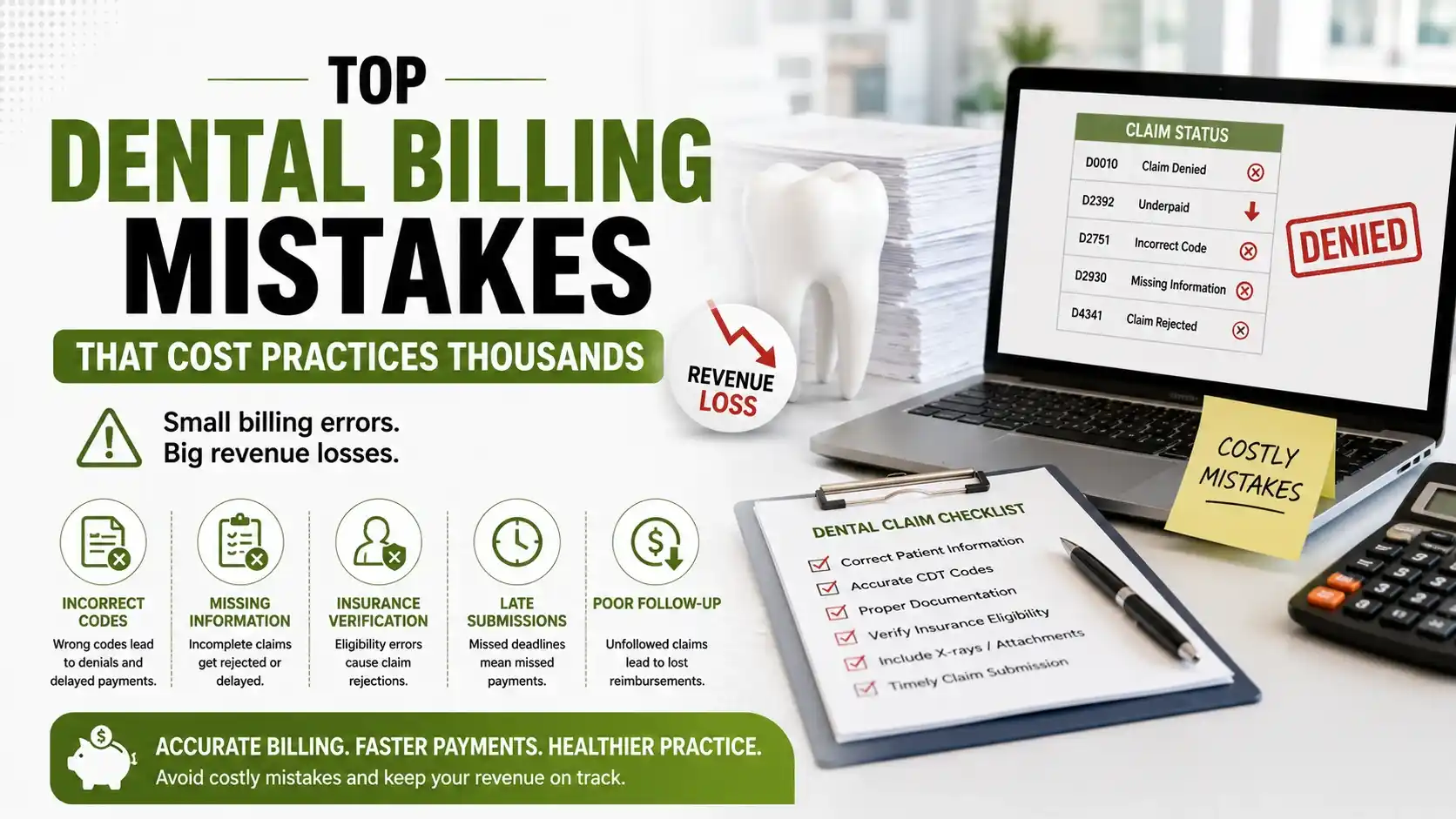
For example, we’ve seen audits arise when a practice consistently bills D4341 (scaling and root planing) for nearly every patient — a pattern that flags an insurer’s algorithms for potential upcoding. Similarly, Denti-Cal often initiates audits for excessive use of filling codes such as D2392 and D2393, or even for something as simple as an office visit (D9430).
Many practices misunderstand D9430, assuming it can be billed at every patient visit.
This is incorrect. According to the Denti-Cal Provider Handbook, D9430 — “Office Visit for Observation (During Regularly Scheduled Hours) – No Other Services Performed” — may only be billed when no other procedure is performed on the same day, other than diagnostic imaging such as X-rays. Unfortunately, many dentists overlook the detailed CDT code descriptions or fail to review their payer handbooks regularly.
Another frequent trigger involves improper billing under a Premier provider in the case of Delta Dental. Some owner dentists, intentionally or not, submit claims for associate-rendered procedures under the owner’s Premier status, so that the office receives payment at the higher Premier fee schedule. This is considered overbilling and misrepresentation, as the rendering provider and billing provider must match accurately. Incorrectly reporting either the billing provider, tax ID, or rendering provider is viewed as an attempt to obtain excess reimbursement that would not be payable under the associate’s PPO contract.
Finally, a third common trigger occurs when patients file grievances.
When insurers such as Delta Dental or Guardian receive a complaint, they often conduct a targeted or full audit of the practice. The insurance company may request 10–15 patient charts for review to verify compliance with clinical and billing documentation standards.
Typically, they require:
- The patient’s original registration
- All treatment plans & signed consent forms
- Copies of all prescriptions issued
- Clinical chart notes that are signed and locked
- Any addendums to the chart notes
- Lab slips and invoices
- Periodontal charts and records
- Radiographs and photos
- Specialist referrals
- Full surgical reports, if applicable
- General anesthesia or oral sedation reports, when relevant
- Financial ledgers reflecting all charges, payments (insurance, personal and/or 3rd party), and all additional adjustments/credits
- And more
At this stage, payers assess whether the office follows standard operating procedures and maintains compliance with HIPAA and HITECH protocols. This is where the ability to prove chart note integrity and to demonstrate that no overbilling occurred becomes critical.
Here’s how your dental practice can confidently prove chart note authenticity and prevent any appearance of overbilling.
Let Your Audit Trails Speak for Themselves
Your practice management software — whether it’s Dentrix, Dentrix Ascend, Open Dental, or Eaglesoft can automatically record who entered, edited, or deleted each note and when it happened.
In Dentrix Ascend, the Chart Audit Log provides timestamped records of every user action. This digital footprint is your strongest defense if you ever need to prove that records were not tampered with.
Best Practice:
Keep audit logging turned on at all times, and export monthly reports for secure storage. Never delete or reset your audit history — it’s your digital witness.
Sign and Lock Notes to Maintain Legal Integrity
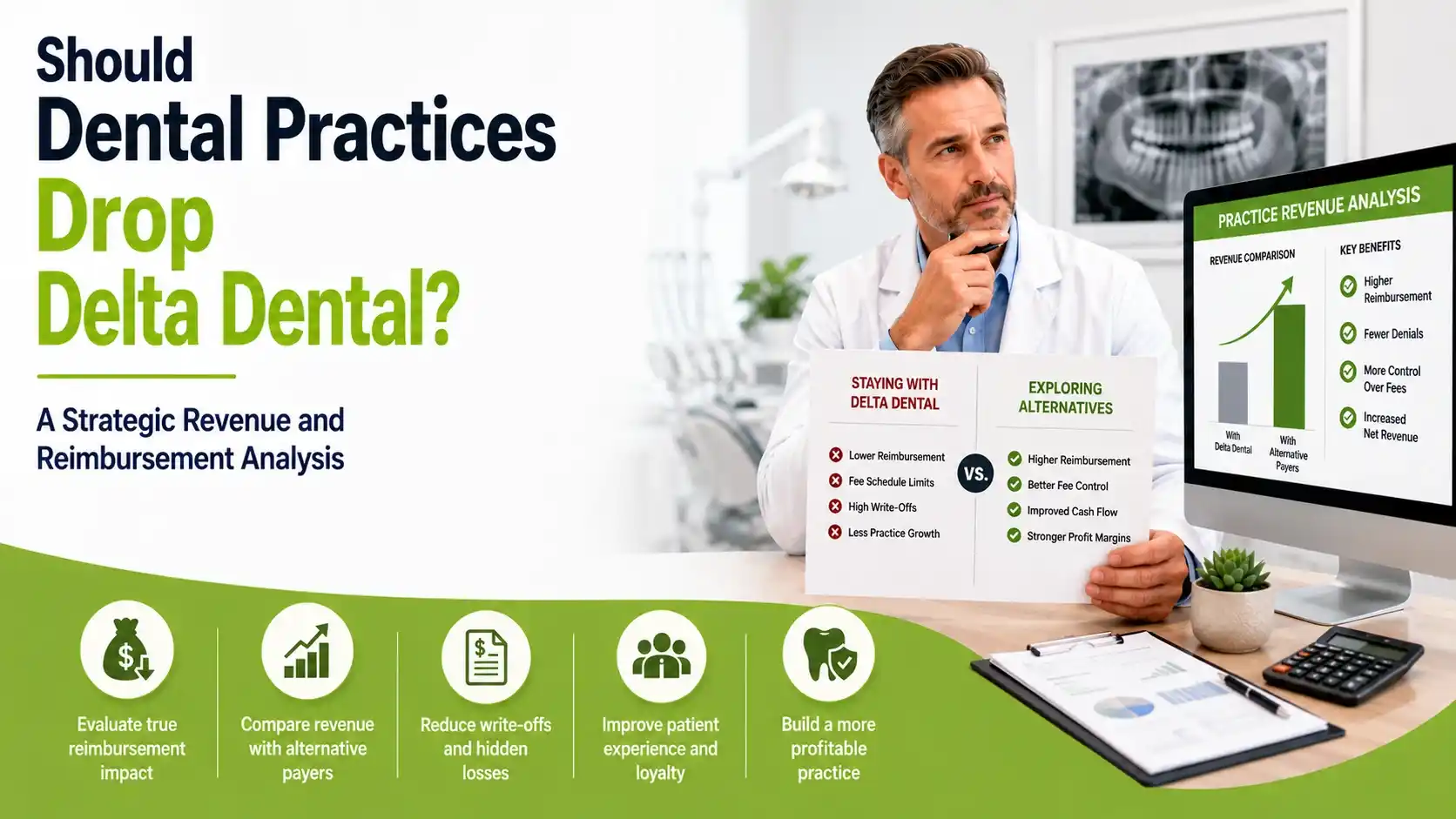
Many providers don’t lock their clinical notes and often realize the importance of this when an insurer like Delta Dental, which often represents the majority of a practice’s revenue, issues a notice to terminate the provider contract.
The reason? The office’s clinical notes were not in order, incomplete, or appeared altered or destroyed.
It’s at that moment that providers say, “I wish I had stayed on top of my chart notes.”
By then, it’s too late — the payer relationship and the practice’s credibility are already at risk.
Once a provider signs and locks a clinical note, it becomes a legal document.
Any later updates must be made as an addendum, not by rewriting or deleting the original entry.
For example:
Addendum – 11/13/2025 (Dr. Smith): Clarified composite placement on #14-MO.
This approach preserves the full sequence of care while maintaining transparency.
Locking notes is not just good practice — it’s a regulatory requirement.
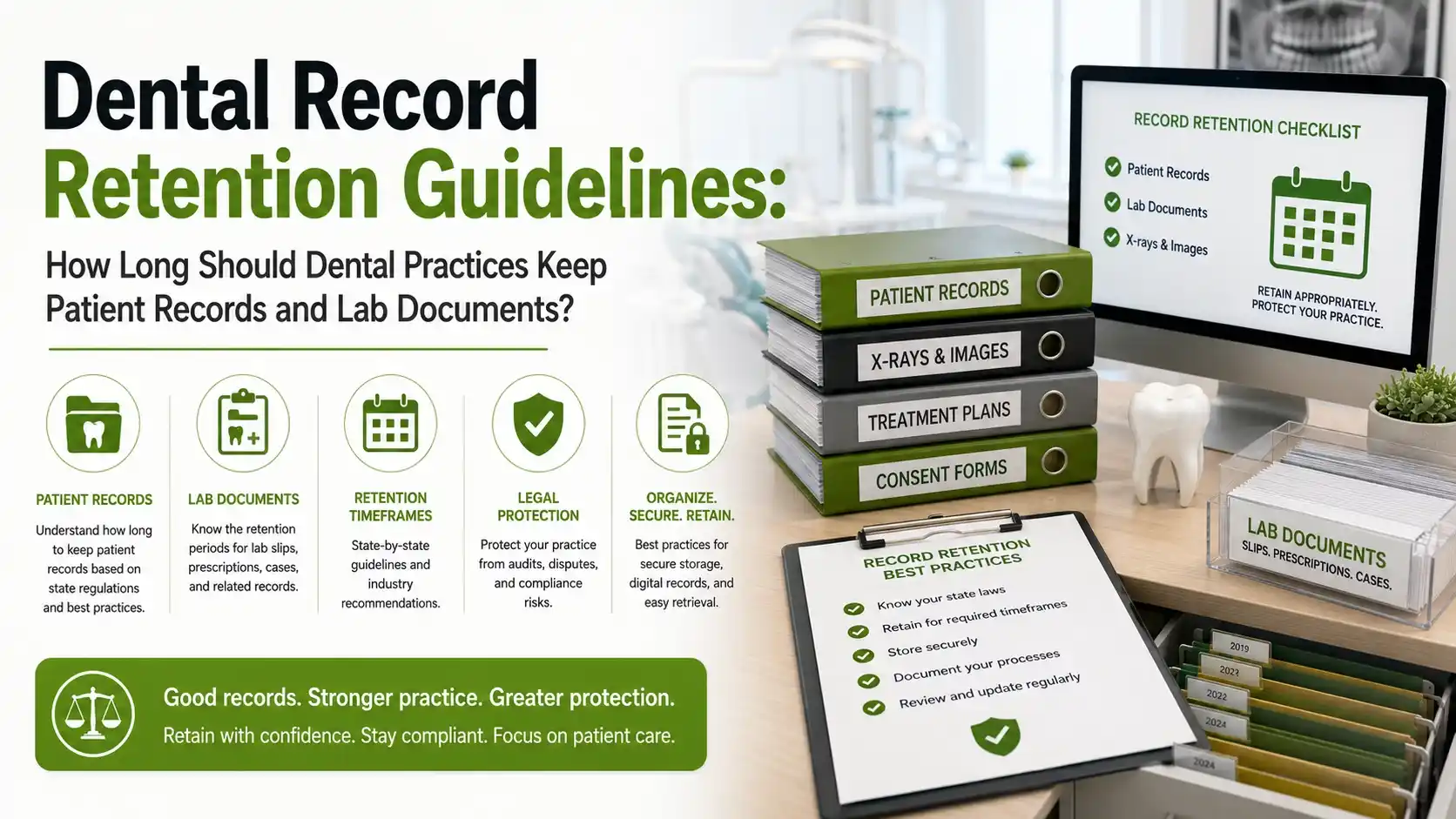
Records must be from the final date of the contract period or from the date of completion of any audit, whichever is later, as required under Section 438.3(u) of Title 42 of the Code of Federal Regulations.
This long retention period ensures providers can substantiate services, defend against audits, and maintain compliance with federal and contractual obligations.
Best Practice:
Require all providers to sign and lock notes daily. Changes after that point must always be dated, signed, and clearly marked as addenda.
Preserve System Backups and Access Logs
If your system is cloud-based (like Dentrix Ascend), your data is automatically backed up and protected by encrypted audit trails.
For server-based systems, maintain daily or weekly backups to safeguard your documentation history. These backups prove that the same data existed at earlier dates, making it virtually impossible for anyone to claim that records were retroactively changed.
Best Practice:
Keep written proof of your backup schedule and vendor compliance with HIPAA and HITECH requirements.
Match Chart Notes to Billing Entries
As a dental billing company, we often emphasize to our clients that we cannot proceed with billing without proper documentation — both to remain compliant with payer and federal regulations and to ensure billing accuracy.
Documentation is our only way to confirm that clinical notes support the procedures being billed and that the dentist actually saw the patient, making the claim legitimate.
Other than X-rays, which, in systems like Dexis, show the exact date and act as proof of the patient’s presence, the chart notes are the foundation of every billable service.
We have often seen front-office staff post procedure codes that don’t match the dentist’s clinical notes. For instance:
The front office posts D2393 #3 – MOL, but the dentist documented #3 MOD.
To prevent these discrepancies, our billing team follows an internal audit process to cross-check all posted procedure codes against the provider’s chart notes before submission.
Therefore, it’s essential that billing proceeds only after chart notes are documented and locked.
Most allegations of overbilling stem from missing or mismatched documentation.
Each claim should always be supported by clear, contemporaneous chart notes that match the clinical and radiographic evidence. Perform a quick internal cross-check:
- Each CDT code has a corresponding note explaining the treatment.
- Tooth numbers, surfaces, and provider initials match between the chart and claim.
- X-rays or intraoral photos substantiate the procedure.
- The billing date matches the date of service and the note signature.
Best Practice:
Make this cross-check a monthly audit routine. It keeps your billing clean, accurate, and defensible.
Establish a “Documentation Integrity Policy”
Every dental office should have a written policy outlining how chart notes are created, edited, and verified.
A solid policy includes:
- Notes entered on the same day of service or within 24 hours.
- Late entries labeled clearly (“Late entry for 11/10/2025 visit”).
- Only treating providers can sign clinical notes.
- No deletion or alteration of original entries; corrections must be made via addendum.
This policy ensures every team member follows consistent, compliant documentation habits — a hallmark of ethical dentistry.
Conduct Routine Compliance Audits
Internal audits and third-party reviews are an excellent way to demonstrate proactive compliance.
Keep a “Documentation Integrity Binder” with:
- Monthly audit trail reports
- Example clinical notes and corresponding claims
- Screenshots of locked entries and signatures
- Policies signed by each provider
Best Practice:
Use these audits to train staff and strengthen your compliance culture — not just to defend against payers, but to continuously improve recordkeeping standards.
Understand the Implications of Unauthorized Alteration or Destruction of ePHI
Tampering with, deleting, or altering electronic protected health information (ePHI) without authorization is a serious federal violation under the HIPAA Security Rule, 45 CFR § 164.312(c)(1) and the HITECH Act.
Such actions can result in:
- Civil penalties ranging from $100 to $50,000 per violation, depending on intent and frequency.
- Criminal penalties, including fines and imprisonment, if willful falsification or destruction of records is proven.
- License and board discipline, as altering patient records constitutes professional misconduct.
- Loss of payer contracts or termination from networks due to breach of documentation integrity clauses.
Beyond penalties, the ethical implications are even greater: unauthorized alterations undermine trust among providers, patients, and insurers. They also compromise the accuracy of patient care records, putting both patient safety and provider credibility at risk.
Best Practice:
Train every team member on proper ePHI handling, restrict editing rights, and maintain an immutable audit trail.
Include clear disciplinary actions in your compliance policy for any unauthorized record modification or destruction.
Align with Legal and Regulatory Standards
Your documentation practices should align with key federal and state requirements, including:
- HIPAA 45 CFR § 164.312(c)(1): Safeguards against improper alteration or destruction of electronic health information.
- California Dental Association (CDA): Requires contemporaneous, accurate, and unaltered patient records.
- Denti-Cal Provider Handbook, Section 3.5: Mandates clear documentation supporting every billed procedure.
Best Practice:
Reference these standards in your internal compliance manual to reinforce accountability and transparency.
Building Trust Through Transparency
Strong documentation is more than a defense mechanism; it’s a reflection of your practice’s integrity.
When your clinical notes, audit trails, and billing align seamlessly, you’re not only compliant; you’re credible. Patients, payers, and partners can trust that your team operates with precision and honesty.
At BEANbite, we help dental practices nationwide establish airtight billing and documentation systems that protect revenue and reputation alike.
© 2025 BEANbite LLC | Dental Billing & Credentialing Services | All Rights Reserved
References
- U.S. Department of Health & Human Services. HIPAA Security Rule, 45 CFR § 164.312(c)(1).
Retrieved from https://www.ecfr.gov/current/title-45/subtitle-A/subchapter-C/part-164 - U.S. Department of Health & Human Services. HITECH Act Enforcement Interim Final Rule.
Retrieved from https://www.hhs.gov/hipaa/for-professionals/special-topics/hitech-act-enforcement-interim-final-rule/index.html - California Dental Association. Recordkeeping and Documentation Standards (2022).
Retrieved from https://www.cda.org/home/practice/practice-support/hipaa-and-compliance - California Department of Health Care Services. Denti-Cal Provider Handbook: Documentation Requirements, Section 3.5.
Retrieved from https://dental.dhcs.ca.gov/Downloads/PI/denti_cal_provider_handbook.pdf