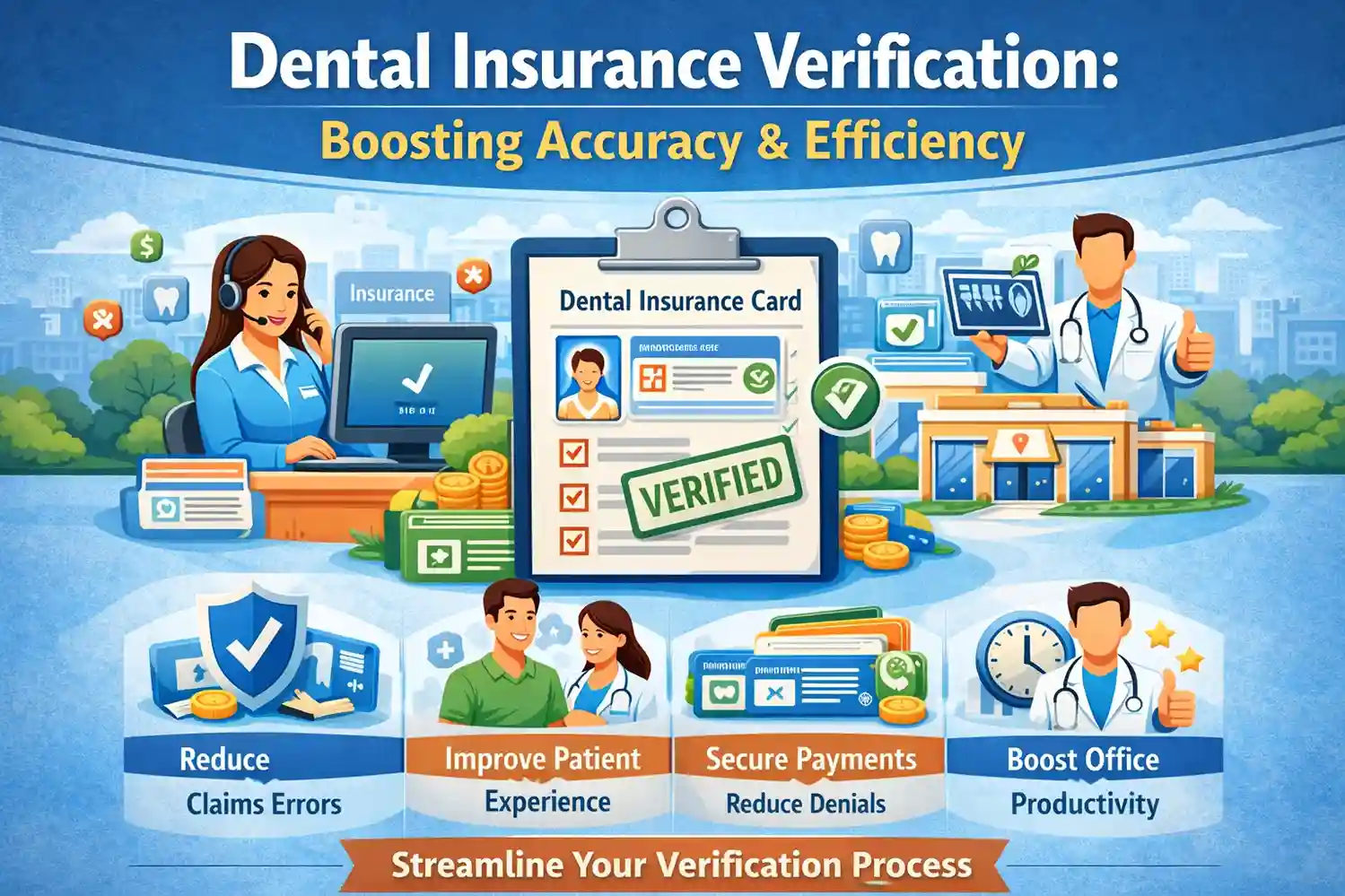
Managing dental practices goes far beyond providing excellent patient care. One crucial yet often overlooked aspect is ensuring accurate insurance verification. Dental insurance verification services help practices streamline billing, reduce claim denials, and improve patient satisfaction. Whether you run a small dental office or a multi-location practice, understanding how these services work can greatly impact your operations and revenue collection.
This guide explores the details of dental insurance verification services, including benefits, processes, and how specialized providers are helping practices run more efficiently.
Table of Contents
ToggleWhat Are Dental Insurance Verification Services?
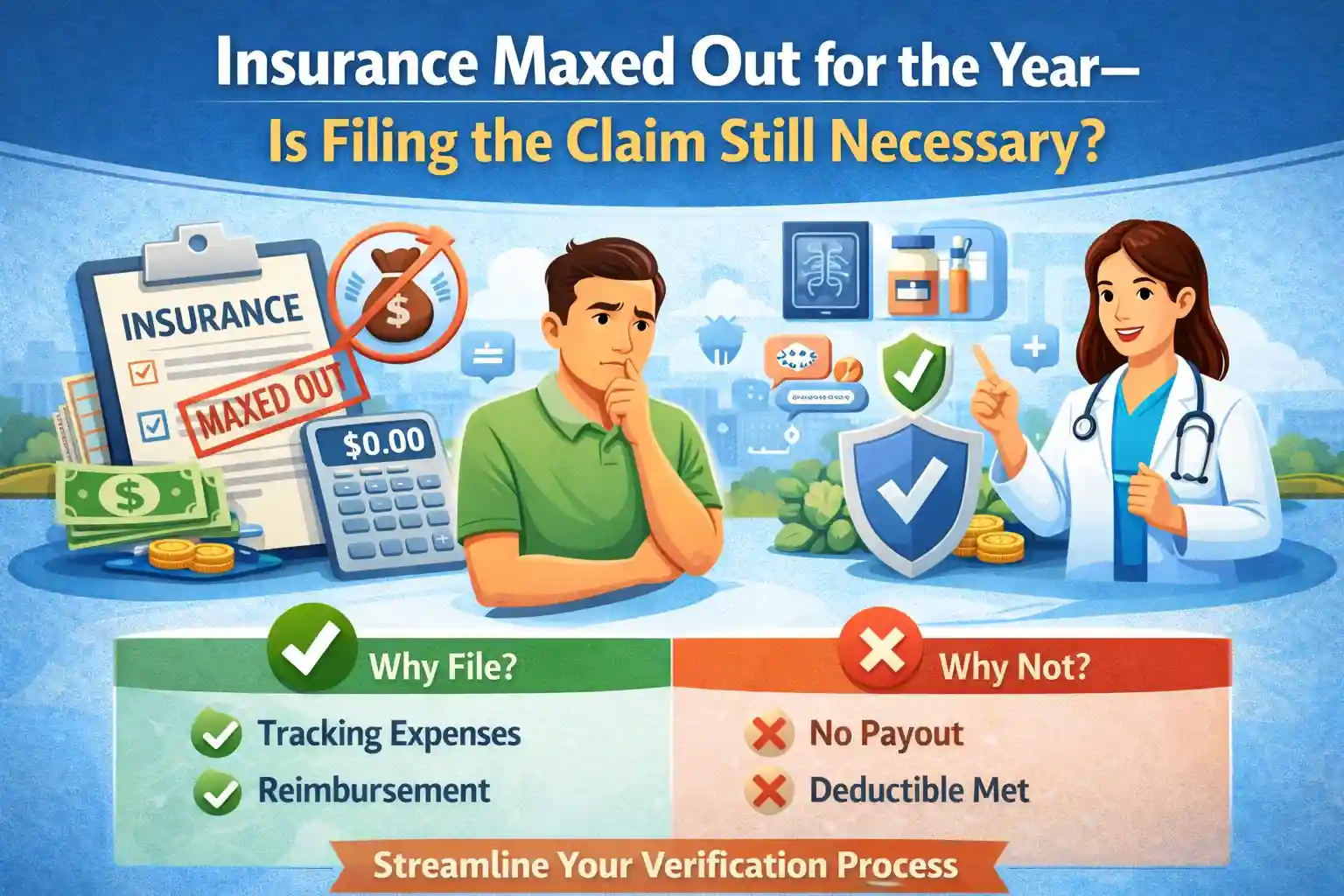
Dental insurance verification services are third-party solutions or in-house processes that confirm a patient’s insurance coverage before their appointment or treatment begins. The goal is to avoid billing surprises, claim denials, or unpaid balances. Essentially, these services ensure that both patients and providers know in advance what is covered, what costs may be out-of-pocket, and how claims should be submitted.
Key components include:
- Checking patient eligibility and coverage details
- Confirming deductibles and co-pays
- Verifying annual maximums and limitations
- Checking waiting periods (for orthodontics, implants, etc.)
- Reviewing exclusions and replacement clauses
- Provider Participation with patient plans
- Out and In network benefits
By having accurate information upfront, dental providers can focus more on treatment while minimizing administrative hassles.
Why Dental Insurance Verification Matters
Failing to verify dental insurance coverage can lead to a number of issues:
- Increased claim rejections due to incorrect information
- Patient dissatisfaction over unexpected bills
- Delayed revenue collection
- Administrative inefficiencies that waste staff time
Dental insurance verification services solve these problems by establishing a clear financial picture before any services are rendered. This fosters trust with patients while protecting the practice’s financial health.
Benefits of Outsourcing Insurance Verification
While some dental practices continue to manage insurance verification in house, an increasing number are outsourcing this function to specialized verification partners to improve accuracy, compliance, and revenue stability. Outsourced verification teams work exclusively with dental insurance plans, payer rules, and carrier-specific nuances, making them far more effective at managing this critical front-end process.
Key advantages include:
- Reduced claim denials: Thorough pre-treatment verification confirms eligibility, frequency limitations, waiting periods, downgrades, and exclusions before services are rendered. This significantly reduces denials tied to eligibility errors or misunderstood benefits.
- Improved operational efficiency: Outsourced teams handle time-consuming insurance calls and portal reviews, allowing front office staff to focus on patient coordination, scheduling, and case presentation rather than chasing benefit details.
- Faster and cleaner billing cycles: Accurate verification results in cleaner claims submission. When claims are submitted correctly the first time, insurance processing is faster, cash flow improves, and accounts receivable days decrease.
- Accurate plan and patient-level data entry: Many outsourcing verification companies do more than confirm benefits. They update insurance plans directly within the practice management software and ensure patient-level details are accurate. This includes updating benefit histories, annual maximums, deductibles, remaining benefits, and code-specific coverage details tied to individual patients.
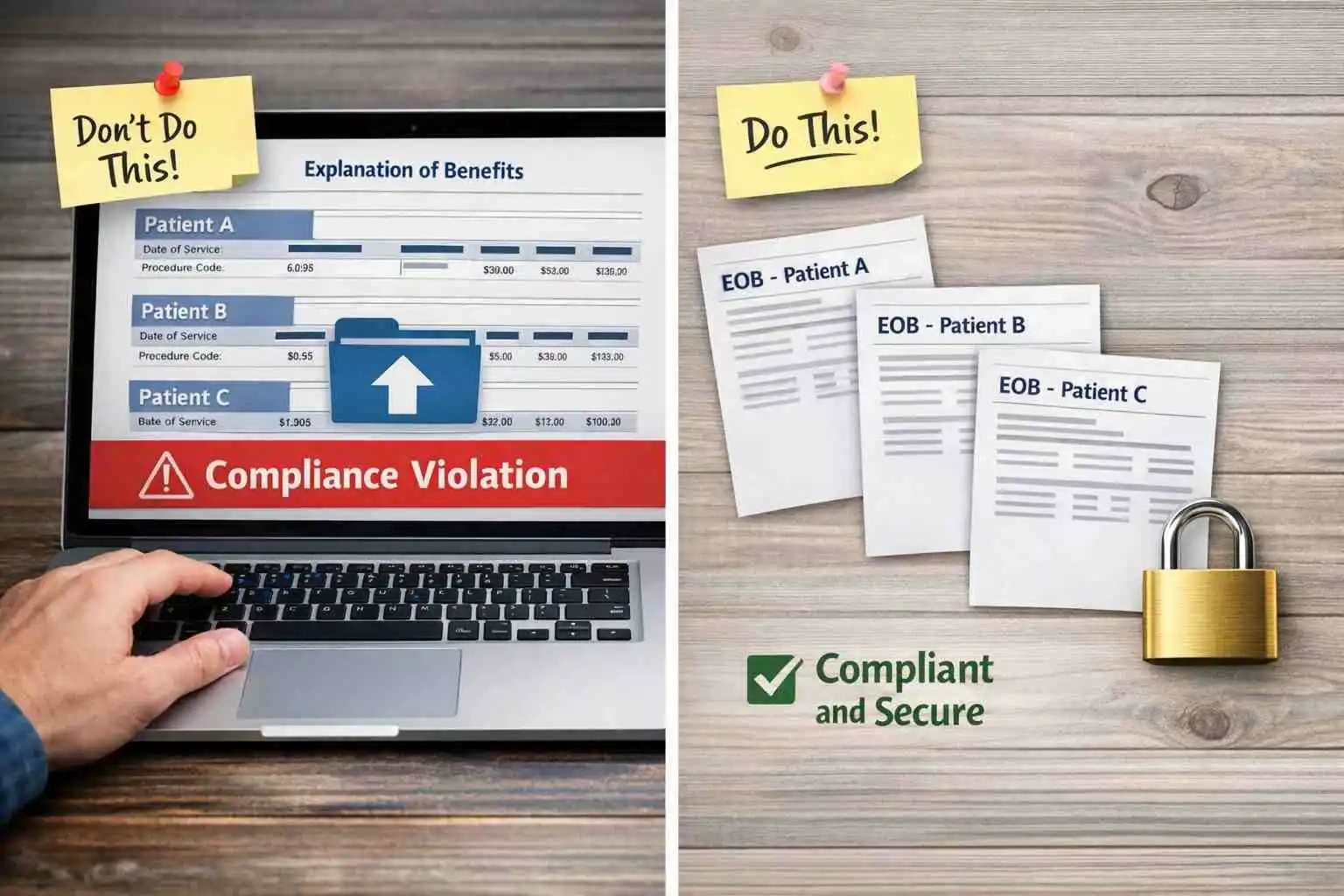
- Improved documentation and audit readiness: Professional verification vendors maintain call recordings and reference numbers for every insurance call without exception. This creates a verifiable audit trail that can be referenced later. When claims are delayed or denied, these records make disputes significantly easier and stronger to support.
- Enhanced patient transparency and trust: Patients appreciate receiving clear and accurate benefit information prior to treatment. Upfront transparency reduces financial surprises, improves treatment acceptance, and strengthens patient confidence in the practice.
- Lower overall administrative costs: Managing verification internally requires ongoing staff training, supervision, and turnover management. Outsourcing converts this into a predictable service cost, often delivering higher accuracy at a lower overall expense.
In short, outsourcing insurance verification strengthens revenue protection, reduces front-desk pressure, and creates a more controlled and defensible billing workflow. It is a practical return to fundamentals, accurate verification upfront prevents costly problems later
How Dental Insurance Verification Works
The process typically involves several steps to ensure every detail is accurately captured.
- Patient appointment scheduling; Insurance details are collected when a new or returning patient books an appointment, including subscriber information, plan name, and policy number.
- Insurance information submission: Patient insurance data is sent to an in-house team or an outsourced dental insurance verification service for review.
- Insurance carrier verification: The verification team contacts the dental insurance company by phone, via an online portal, or by written communication to confirm active eligibility and coverage.
- Benefit and coverage confirmation: Verified details include covered services, frequency limitations, deductibles, co-payments, remaining annual maximums, exclusions, provider participation status, fee schedule information, missing tooth clause, prep and seta date details, assignment of benefits, and code-specific benefits.
- Accurate documentation and data entry: Insurance plan and patient-level benefits are documented and updated in the dental practice management software.
- Verification report to dental office: A clear insurance verification summary is delivered to the dental office 5-7 days in advance, providing a detailed snapshot of eligibility status for all patients on a given appointment date.
- Improved billing accuracy and patient transparency: Verified benefits help reduce claim denials, improve billing accuracy, and support clear financial discussions with patients.
Tailored Solutions for Dental Practices
Every dental office has unique patient demographics and insurance-related needs. Choosing the right verification service can help practices address challenges such as:
- Managing patients with multi-state or complex insurance plans
- Handling high volumes of new or seasonal patients
- Dealing with diverse insurance carriers and plan structures
- Navigating specific needs around Medicare Advantage or supplemental dental plans
- Handling plans with the Table of Allowance (TOA) or the employer fee schedules
By using specialized dental insurance verification services, practices can reduce administrative burdens while ensuring compliance with industry requirements.
Integrating Verification Services With Practice Management
Artificial intelligence has made impressive advances, but dental insurance verification remains an area where human expertise still outperforms automation. Insurance carriers, plan structures, and real-time exceptions continue to limit AI’s effectiveness in this space.
| Comparison Area | AI Insurance Verification Software | Outsourced Dental Insurance Verification Company |
| Dental insurance eligibility verification | Pulls data from insurance portals that may be outdated or incomplete. | Confirms real-time eligibility directly with dental insurance carriers. |
| Code-specific dental benefits | Typically limited to high-level plan summaries. Often misses CDT-specific rules. | Verifies CDT code-level benefits, frequency limits, downgrades, and exclusions. |
| Preventive and diagnostic services accuracy | Frequently misinterprets exams, X-rays, and prophylaxis frequency rules. | Confirms diagnostic and preventive benefits directly with carrier representatives. |
| Handling plan exceptions | Cannot reliably resolve reinstatements, coordination of benefits, or plan overrides. | Specialists speak directly with insurance reps to clarify exceptions and discrepancies. |
| Data validation and judgment | Accepts portal data as-is without questioning inconsistencies. | Experienced verification staff challenge unclear responses and request clarification. |
| Documentation for claim disputes | Limited system logs. No carrier accountability or reference numbers. | Maintains call recordings, reference numbers, rep names, and call timestamps. |
| Audit and recoupment defense | Weak support during audits or post-payment reviews. | Strong audit trail supports appeals, disputes, and recoupment defense. |
| Adaptability to insurance carrier changes | Requires software updates when portals or rules change. | Teams adapt immediately based on daily carrier interaction. |
| Patient benefit history review | Limited ability to evaluate prior usage or remaining benefits. | Reviews patient-level history, remaining maximums, and frequency usage. |
| Practice management software updates | Often read-only or partially automated. | Updates plan-level and patient-level benefits directly in the PMS. |
| Accountability and risk exposure | All errors fall on the dental practice. | Shared responsibility with documented verification processes. |
| Overall reliability for dental billing | Useful only as a supplemental tool. | Reliable, defensible, and revenue-protective. |
AI is a helpful support tool, not a replacement, for insurance verification today. Outsourced verification companies combine human judgment, live carrier interaction, and defensible documentation. Until insurance carriers standardize their data and processes, verification remains a human-driven function where experience protects revenue.
Trends in Dental Insurance Verification
The landscape of insurance verification is evolving with technology. Some trending advancements include:
- Increased Adoption of Hybrid Verification Models: Dental practices are no longer choosing between strictly in-house or fully automated verification. Instead, many are using a hybrid approach that pairs AI tools with human expertise. This improves speed while preserving accuracy.
- Greater focus on code-specific benefit verification: Verification is moving beyond basic eligibility checks to confirm CDT-level benefits, frequency limits, waiting periods, and exclusions before treatment is rendered.
- Increased emphasis on documentation and audit readiness: Practices are prioritizing call recordings, reference numbers, and detailed verification notes to support claim disputes and post-payment reviews.
- Data-Driven Decision Making in Dental Insurance Verification : As AI and automation increasingly dominate the dental industry, insurance companies themselves are now relying heavily on AI-driven systems to approve or deny claims. Frequency-based denials are fast, automated, and predictable. As a result, carriers are shifting their focus and becoming more aggressive in denying claims for reasons beyond frequency limits.
Insurance companies are using AI-based tools to scrutinize high-value and clinically complex codes such as D4341, D2740, and surgical procedures. These tools give carriers a competitive advantage, while key code-specific clauses and limitations are often buried or omitted from public-facing websites. This shift is intentional, especially as carriers recognize that many dental offices are also relying on AI-based verification tools instead of live confirmation.
For example, a claim for D4249 was denied because the carrier required a four-week healing period between crown lengthening and crown placement. This requirement was not visible through AI-based verification or portal data. As a result, the office was unable to collect for the crown due to a lack of access to this critical limitation prior to treatment.
In another case involving a Cigna plan, implant coverage was denied based on a plan-specific clause stating that implant benefits apply only when a single tooth is missing within the arch. Because multiple teeth were missing, the initial appeal was denied. Upon reviewing the call recording and reference number, it was confirmed that the Cigna representative failed to disclose this limitation even though code-specific exclusions were explicitly requested during the recorded verification call. Due to this documented error on the carrier’s part, the office ultimately collected payment by referencing the call recording and the call reference number. This type of dispute cannot be challenged using AI-driven verification alone.
As a result, dental offices and verification providers are increasingly analyzing denial trends, payer behavior, and benefit breakdown patterns. This data-driven insight allows practices to adjust front-desk workflows, strengthen pre-treatment verification, and reduce future denials.
The takeaway is simple. AI accelerates denials, but it does not protect revenue. Human verification, documented calls, and trend analysis are what give dental practices leverage in an increasingly automated insurance landscape.
Adopting these trends enhances efficiency while improving transparency for patients.
Choosing the Right Verification Partner
When selecting a dental insurance verification service, practices should consider:
- Experience with various insurance carriers and plan types
- Knowledge of dental industry requirements
- Ability to handle high patient volumes smoothly
- Transparent communication and reporting methods
- Integration capabilities with existing software
- Multilingual support for diverse patient bases
A good verification partner can become a long-term asset, helping practices grow sustainably.
Conclusion
Insurance verification is the backbone of smooth practice management in dentistry. By investing in dental insurance verification services, practices can avoid costly denials, ensure patient satisfaction, and streamline revenue cycle management.
Dental insurance verification services are not just about confirming benefits; they are about building trust, safeguarding revenue, and enabling dental providers to focus on what matters most—patient care.
FAQs
- What are dental insurance verification services?
They are professiona outsourcedl services that verify a patient’s insurance eligibility, benefits, and coverage details before treatments are scheduled. - Why are dental insurance verification services important?
They help avoid claim rejections, billing errors, and patient dissatisfaction by ensuring accurate coverage details upfront. - Can verification services integrate with my dental practice software?
Yes, many modern services integrate directly with practice management and EHR systems for smooth operations. - How do outsourced verification providers reduce costs?
They eliminate the need to hire, train, and maintain a full-time in-office dedicated person while delivering more accurate results. - How far out are the insurances verified?
Every Practice needs are different, but typically most outsourcing companies can make verifitions available between 3-7 days out.