Running a successful dental practice requires more than providing excellent patient care. Behind every completed procedure is a billing process that directly impacts the financial health of the practice. Even small errors in dental billing can lead to claim denials, delayed reimbursements, lost revenue, and increased administrative workload.
Many dental practices unknowingly lose thousands of dollars each year due to preventable billing mistakes. Whether you’re managing billing in-house or working with an outsourced billing partner, understanding these common pitfalls can significantly improve your revenue cycle.
At BEANBite, we help dental practices streamline their billing operations, reduce claim denials, and maximize reimbursements through accurate and efficient dental billing services.
Table of Contents
ToggleWhy Dental Billing Accuracy Matters
Dental billing is much more than submitting insurance claims. It involves accurate coding, verifying patient eligibility, documenting procedures, submitting clean claims, tracking payments, managing denials, and following up with insurance companies.
A single billing error can result in:
- Delayed payments
- Claim denials
- Underpaid claims
- Increased administrative costs
- Poor patient experience
- Revenue leakage
Consistent billing accuracy ensures faster reimbursements, improved cash flow, and stronger financial performance.
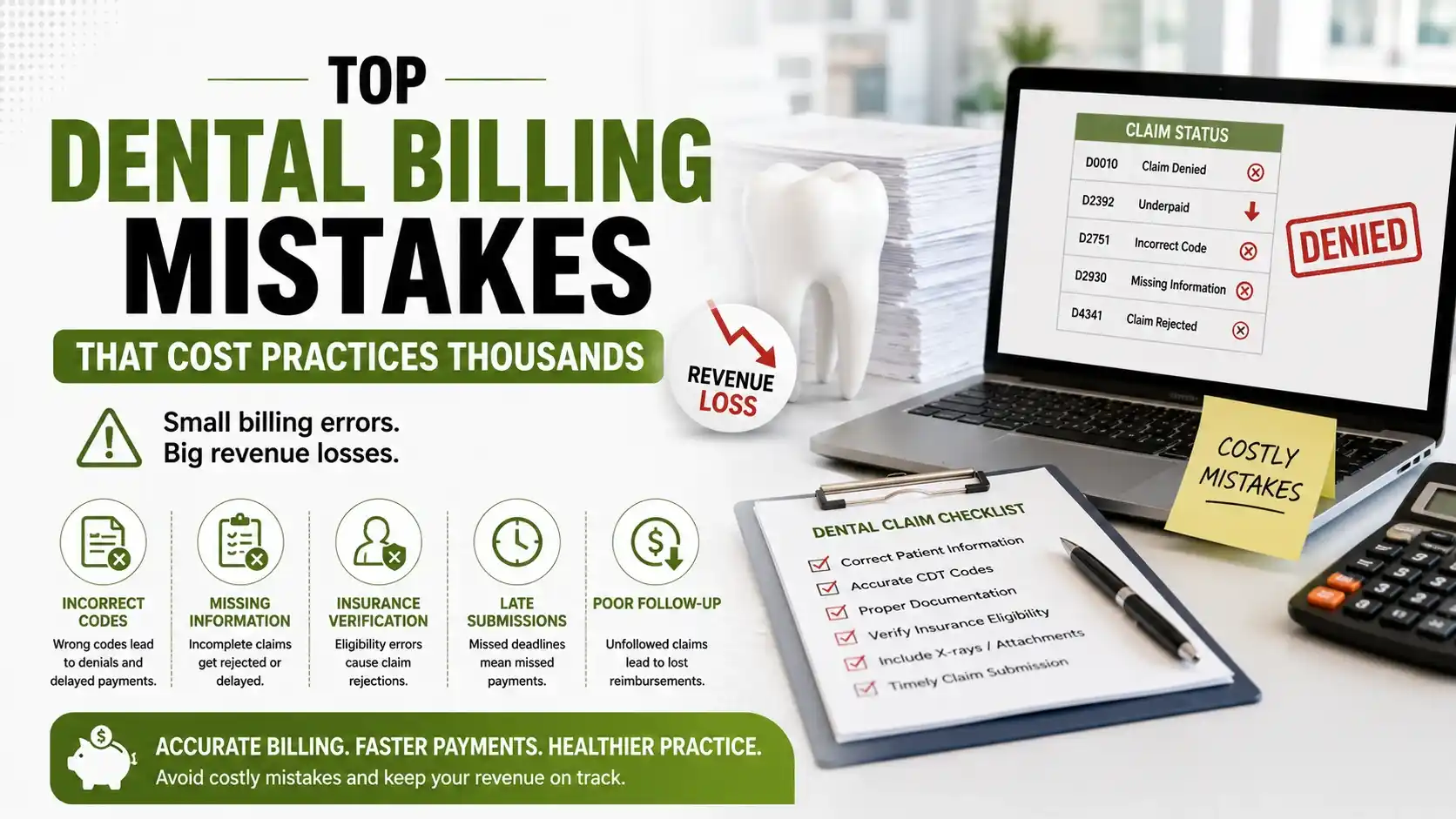
1. Incorrect CDT Coding
One of the most common dental billing mistakes is using incorrect or outdated Current Dental Terminology (CDT) codes.
Insurance companies rely on CDT codes to understand the procedures performed. Even a minor coding mistake can trigger claim denials or reduced reimbursements.
Common coding errors include:
- Using outdated CDT codes
- Selecting incorrect procedure codes
- Missing required modifiers
- Coding procedures differently from clinical documentation
Regular coding updates and staff training help minimize these costly mistakes.
2. Incomplete Patient Information
Simple demographic errors often lead to rejected claims before they are even processed.
Examples include:
- Incorrect patient name
- Wrong date of birth
- Invalid insurance ID
- Missing subscriber information
- Incorrect employer details
Verifying patient information during every visit significantly reduces claim rejections.
3. Failing to Verify Insurance Eligibility
Many practices assume insurance information remains unchanged.
However, patients frequently experience:
- Employer changes
- Insurance plan updates
- Coverage modifications
- Benefit limitations
Submitting claims without verifying eligibility often results in denied claims and unexpected patient balances.
Insurance verification before appointments saves valuable time and reduces billing complications.
4. Poor Clinical Documentation
Insurance companies require proper documentation to support submitted procedures.
Missing documentation may include:
- Clinical notes
- X-rays
- Periodontal charts
- Intraoral photographs
- Treatment plans
Incomplete documentation makes it difficult for insurers to validate claims, leading to delays or denials.
Accurate clinical records strengthen claim approval rates.
5. Missing Filing Deadlines
Every insurance provider has specific claim submission deadlines.
If claims are submitted after the filing limit, insurers may reject them regardless of treatment quality.
Late submissions commonly occur due to:
- Administrative backlog
- Staff shortages
- Manual billing processes
- Poor workflow management
Implementing automated claim tracking helps ensure timely submissions.
6. Ignoring Claim Denials
Many practices focus on submitting claims but fail to actively manage denied claims.
A denied claim should never be ignored.
Common reasons for denials include:
- Missing documentation
- Coding errors
- Eligibility issues
- Duplicate claims
- Missing attachments
Successful practices review denial reports regularly, correct errors quickly, and resubmit claims promptly.
Effective denial management can recover thousands of dollars in lost revenue every year.
7. Lack of Follow-Up on Outstanding Claims
Submitting a claim is only the beginning of the billing process.
Many practices lose revenue simply because unpaid claims are never followed up.
Outstanding claims should be monitored continuously to identify:
- Pending claims
- Delayed reimbursements
- Payment discrepancies
- Appeals requiring action
Consistent Accounts Receivable (AR) follow-up improves collections and shortens payment cycles.
8. Incorrect Fee Schedule Management
Insurance fee schedules change regularly.
If practice management software contains outdated fee schedules, billing staff may:
- Undercharge procedures
- Overestimate reimbursements
- Create patient billing discrepancies
Regular fee schedule updates help practices collect the correct payment while maintaining accurate patient balances.
9. Poor Coordination of Benefits (COB)
Patients with multiple insurance plans require proper coordination of benefits.
Mistakes in determining:
- Primary insurance
- Secondary insurance
- Claim submission order
can cause repeated claim denials.
Understanding each insurer’s COB rules ensures smoother reimbursement and fewer billing complications.
10. Not Reviewing Billing Performance Metrics
Many dental practices focus solely on daily patient care without monitoring billing performance.
Important Key Performance Indicators (KPIs) include:
- First-pass claim acceptance rate
- Claim denial percentage
- Days in Accounts Receivable
- Collection ratio
- Insurance aging reports
- Outstanding balances
Monitoring these metrics helps identify recurring billing issues before they become major financial losses.
How These Billing Mistakes Impact Your Practice
Even minor billing errors can create significant financial consequences over time.
Common impacts include:
- Reduced cash flow
- Increased claim denials
- Higher administrative workload
- Delayed insurance payments
- Patient dissatisfaction
- Lower profitability
Practices that proactively improve billing accuracy often experience faster reimbursements, healthier revenue cycles, and improved operational efficiency.
Best Practices to Prevent Dental Billing Errors
Reducing billing mistakes requires a combination of trained staff, accurate processes, and continuous monitoring.
Some proven best practices include:
- Verify insurance eligibility before every appointment.
- Keep CDT codes updated annually.
- Double-check patient demographics.
- Maintain complete clinical documentation.
- Submit clean claims promptly.
- Monitor Accounts Receivable regularly.
- Analyze denial trends monthly.
- Train billing staff on insurance updates.
- Use billing software effectively.
- Partner with experienced dental billing professionals.
These practices can significantly improve claim acceptance rates while reducing administrative burden.
Why Dental Practices Choose BEANBite
Managing dental billing internally can be time-consuming and resource-intensive. As insurance requirements continue to evolve, maintaining billing accuracy becomes increasingly challenging.
BEANBite specializes in helping dental practices optimize their revenue cycle with comprehensive dental billing solutions.
Our services include:
- Accurate insurance claim submission
- CDT coding support
- Insurance eligibility verification
- Denial management and appeals
- Accounts Receivable follow-up
- Payment posting
- Revenue cycle optimization
- Billing performance reporting
Our experienced billing professionals work as an extension of your team, allowing your staff to focus on delivering exceptional patient care while we handle the complexities of dental billing.
Final Thoughts
Dental billing errors may seem small individually, but together they can cost dental practices thousands of dollars every year. From incorrect coding and missing documentation to delayed follow-ups and insurance verification issues, every step of the billing process plays a critical role in maintaining a healthy revenue cycle.
By implementing accurate billing practices, monitoring key performance metrics, and partnering with experienced billing experts like BEANBite, dental practices can reduce claim denials, accelerate reimbursements, and improve overall financial performance.
Investing in efficient dental billing isn’t just about getting paid faster—it’s about building a stronger, more profitable practice that can continue providing outstanding patient care for years to come.